“What is a weed? A plant whose virtues have not yet been discovered.” ~Ralph Waldo Emerson
Or rediscovered. The bright yellow, happy dandelion that announces the arrival of spring every year has been turned into a common weed from its once eloquent position as a treasured flower. Just as soon as they pop up, many homeowners are immediately trying to eradicate this flower from invading their lawns. At what point did the dandelion receive a tarnished reputation?
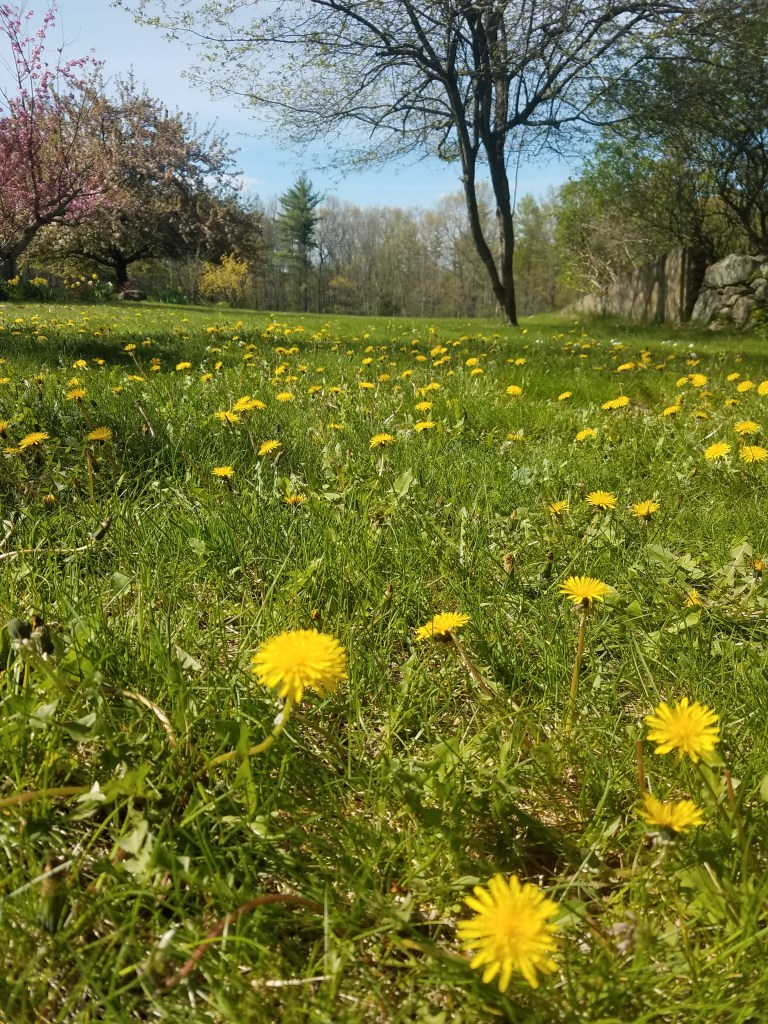
“Dandelion” comes from the French dent-de-lion which means The Tooth of the Lion to describe the shape of its green leaves. These flowers have been revered for thousands of years in Roman, Greek, and Chinese medicine. They are not native to North America, but most likely were brought here on the Mayflower purposefully by settlers because of the plants’ medicinal virtues. The dandelion is a member of the daisy family, but since all parts of the plant–leaves, stems, and flowers–are useful, it can actually be classified as an herb.
Ironically for landscapers, dandelions are quite good for the lawn as they aerate the soil and loosen the hard packed earth. Their long taproots soak up nutrients and spread them across the yard–meaning they are a natural fertilizer.
Dandelions are high in Vitamins A and C, and are nutrient dense with iron, calcium, and potassium. They have historically been used to treat ailments such as dental issues, fevers, wounds, baldness, dandruff, lethargy, and depression. They boost the immune system, detoxify the liver, and support a healthy gut. Visualize all the stagnation from the winter months. The timing of the dandelions’ blooming is not coincidental. I shared a beloved plant quote in a previous post I wrote about mullein:
“An old Austrian peasant saying claims that the herbs needed to cure the major diseases of people living in a house will be found growing within a few yards of that house…….Certain climactic situations and soil types will produce plants with the medicinal properties needed to treat the diseases caused by those same situations.”
~Essential Herbal Wisdom by Nancy Arrowsmith
So eat your dandelions to wake up the body after winter’s slumber. The leaves can be used in salads, but if you find they are too bitter, sauté them with a little garlic and olive oil instead. The roots can be cooked and eaten as a side vegetable dish. Or dry the roots and store them to use later in herbal tonics. The flowers are delicious coated with seasoning and browned on the stove top. Here’s my simple recipe:
Wash a bowlful of freshly picked dandelion flowers. Shake off the excess water, but leave them slightly wet. Sprinkle with flour and seasoning of choice and toss to coat. Sauté this mixture in a pan of olive oil until golden brown, stirring as needed. They taste like a fritter with the crispy outside and soft, doughy inside. Yes, this seems slightly weird at first, I admit. But I encourage you to try it because they are really good!


 The Pink Lily Pad and Two Tadpoles
One thought on “The Teeth of the Lion”