I previously began writing about essential oils in Scripture a couple of months ago in an introductory post.
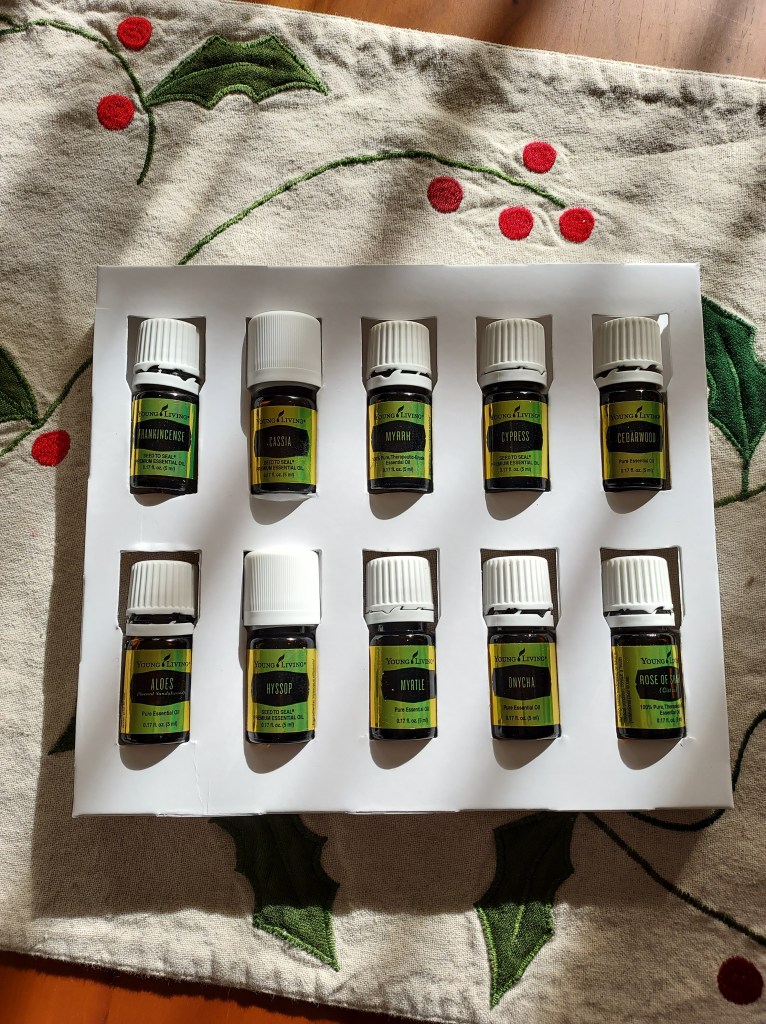
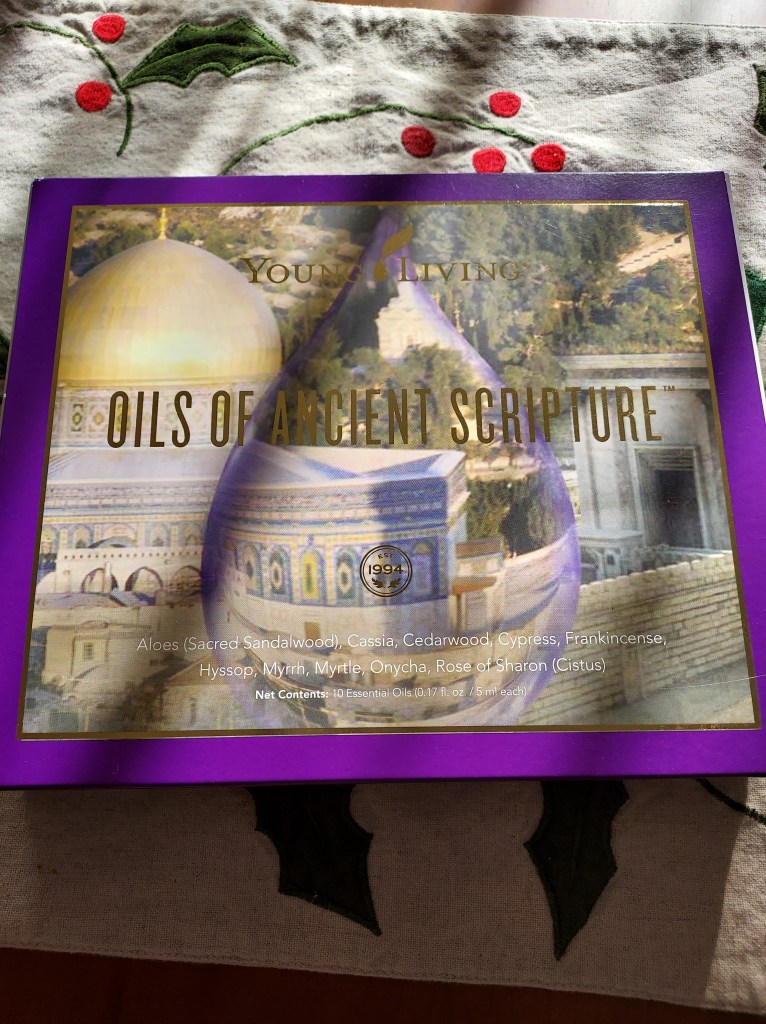

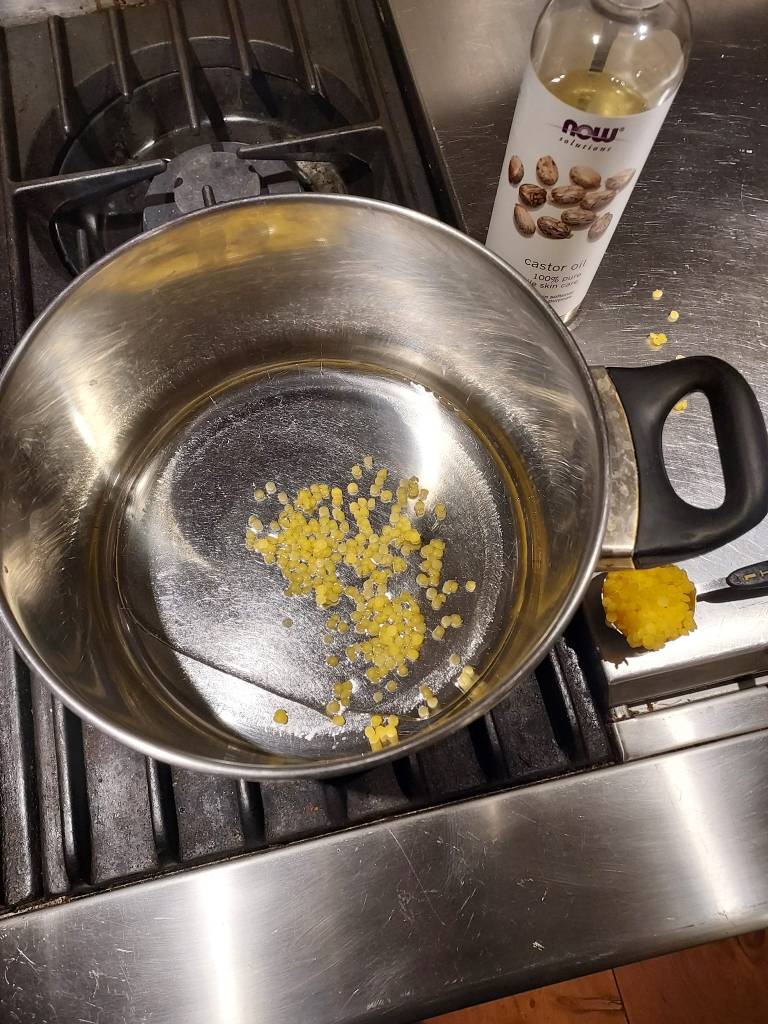
In this beautiful collection of 10 oils, each can be used on its own or combined easily with the others. This project utilizes Myrtle and Hyssop, both of which are supportive of the respiratory system. With the lingering winter sniffles and the early spring seasonal changes, this homemade chest rub will help make symptoms more tolerable. I used castor oil for my carrier (just because it is what I had on hand), but there are so many choices to use such as coconut, olive, grapeseed, etc.
MYRTLE
Source: From leaves of the tree
Scriptures: Nehemiah 8:15; Esther 2:7; Isaiah 41:19; 55:13; Zechariah 1:7-11
Myrtle is one of the 4 sacred plants used in honoring the Feast of Tabernacles, which celebrates the end of the Exodus/wandering in the desert. (The other 3 plants used are the fruit of a citron tree, an unopened frond from a date palm tree, and a leafy branch from a willow tree. ) Esther’s Hebrew name was Hadassah, meaning Myrtle.
Ancient uses: Religious ceremonies, purification
Modern-day uses:
- Eucalyptus-like scent
- Supports respiratory system
- Helps with skin conditions such as acne and bruising
- Hormone balancer

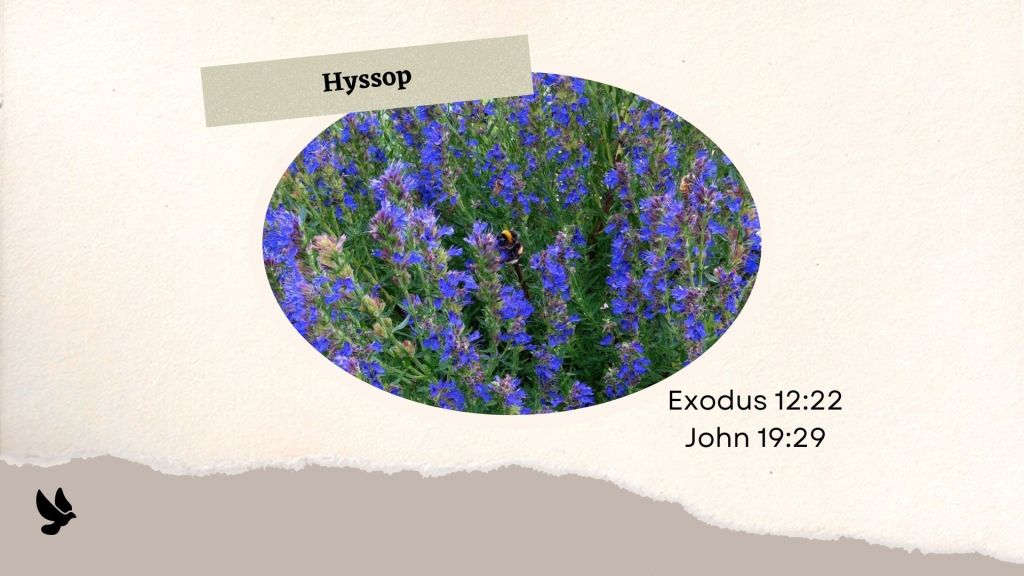
HYSSOP
Source: Stems and leaves
Found in Scriptures: Exodus 12:22 (Passover); Leviticus 14:4, 6, 49, 51,52; Numbers 19:6, 18; Kings 4:33; Psaml 51:7; John 19:29; Hebrews 9:19
Ancient uses: nose, throat, and lung afflictions; ritual cleansing and ceremonial offerings; skin ailments; repeller of evil spirits
During the Passover, the Israelites struck the posts and lintels of their doorways with a branch of hyssop, releasing its aromatic oils along with the lamb’s blood, as protection from the death angel. During his last moments on the cross, Jesus was offered a sponge with sour wine extended with a fragrant branch of hyssop. Why hyssop? Crucifixion is death by slow suffocation as one’s lungs gradually fill up with fluid. Breathing the scent of hyssop may have been offered by ladies of mercy to those dying by crucifixion to help ease their congestion and provide some relief both physically and emotionally.
Modern-day uses: Hyssop is still used today to help with the healing of the respiratory system. It is nourishing to the skin to help with cuts and wounds. This oil is also detoxifying and emotionally balancing. Diffuse to help you relax and breathe.



 The Pink Lily Pad and Two Tadpoles