I’m continuing with my theme on sleep. I’m trying to establish some new healthy habits in my life, and sleep is one of the top priorities for me. I type this with some slight eye rolling at myself because I’m in between night shifts at the moment. Did I nap less than I should have? Yes. Am I craving caffeine? Yes.
Well, all we can do is our best in each moment. Part of life is challenging ourselves to grow. And that doesn’t mean we’re going to get it right on the first several tries either!
In a previous post, “Sleep Struggles,” I mention that sleep becomes troublesome for women in the perimenopausal stage in their early to mid 40s. This is because estrogen and progesterone play roles in regulating sleep.
The following graphs specifically focus on the hormones of women as they gracefully move into their 40s: estrogen, progesterone, LH, and FSH.
The first graph shows a beautiful and natural fluctuation of hormones throughout the month:
Normal Cycle

The Aging Cycle
But then what happens in our 40s? The levels of estrogen and progesterone are trending downward, but their varying fluctuations leading to unpredictable symptom changes.
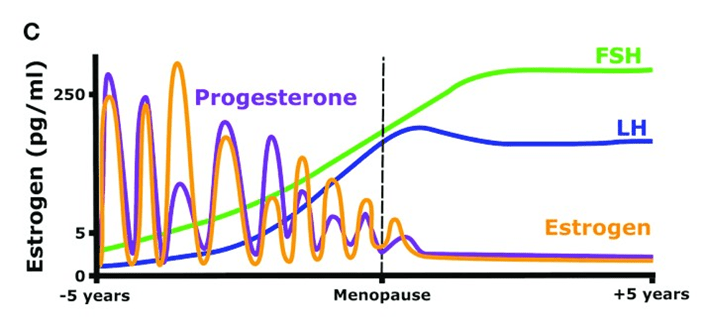
As perimenopause begins, progesterone is the first hormone to decline and then later on it is followed by estrogen. Both work together to provide a restful night’s sleep. Progesterone helps to produce melatonin, also a hormone, that is responsible for regulating our sleep-wake cycle. After a woman drifts off to dreamland, estrogen helps her stay asleep.
Low estrogen causes the notorious hot flash. This is a sudden increase of a heating sensation throughout the body. When they occur during sleeping hours, they are called night sweats. A woman is woken from sleep from this sudden increase in body temperature that is regulated by sweating. Often, a change of pajamas and sheets is needed because the sweating is so profuse. After all this, it is difficult to fall back to sleep because along with the heat, there is also a rush of adrenaline.

Both estrogen and progesterone support the nervous system as well, and their decline can leave women feeling out of sync. Racing thoughts in the middle of the night can abruptly disrupt sleep and cause a woman to stay awake for hours.
So, what is the point of this little post from my blog today? That if you are a woman in her 40s, or if you know a woman of this age group, what you are experiencing is totally normal!
Yes, your sleep difficulties are expected experiences of this time in your life. And maybe hearing this might make you feel a little better knowing that you are not alone! And in words of G.I. Joe, “Knowing is half the battle.”

Here are some tips to try to “normalize” these issues:
- Establish quiet time 1 hour before bed. This includes eliminating the use of electronic devices. These emit “blue light” which prevents the natural production of melatonin, our sleep hormone.
- Avoid caffeine, nicotine, and alcohol before bed. All will disrupt your sleep cycle.
- Try relaxing with a hot bath, meditation, or gentle stretching

- Diffuse essential oils like lavender and cedarwood. Smells can signal the brain that it’s time to relax.
- Keep your bedroom cool, quiet, and dark. Maintain the temperature between 60 and 67 degrees.
- Use essential oils for hormonal support such as clary sage, lavender, bergamot, cypress, and sage lavender. Diffuse throughout the day or make them into a roller to apply topically. (You will smell amazing too!)
- Apply peppermint essential oil to the back of the neck and wrists to keep cool during a hot flash.
As always, consult your healthcare provider for any concerns that you may have! You got this!

 The Pink Lily Pad and Two Tadpoles